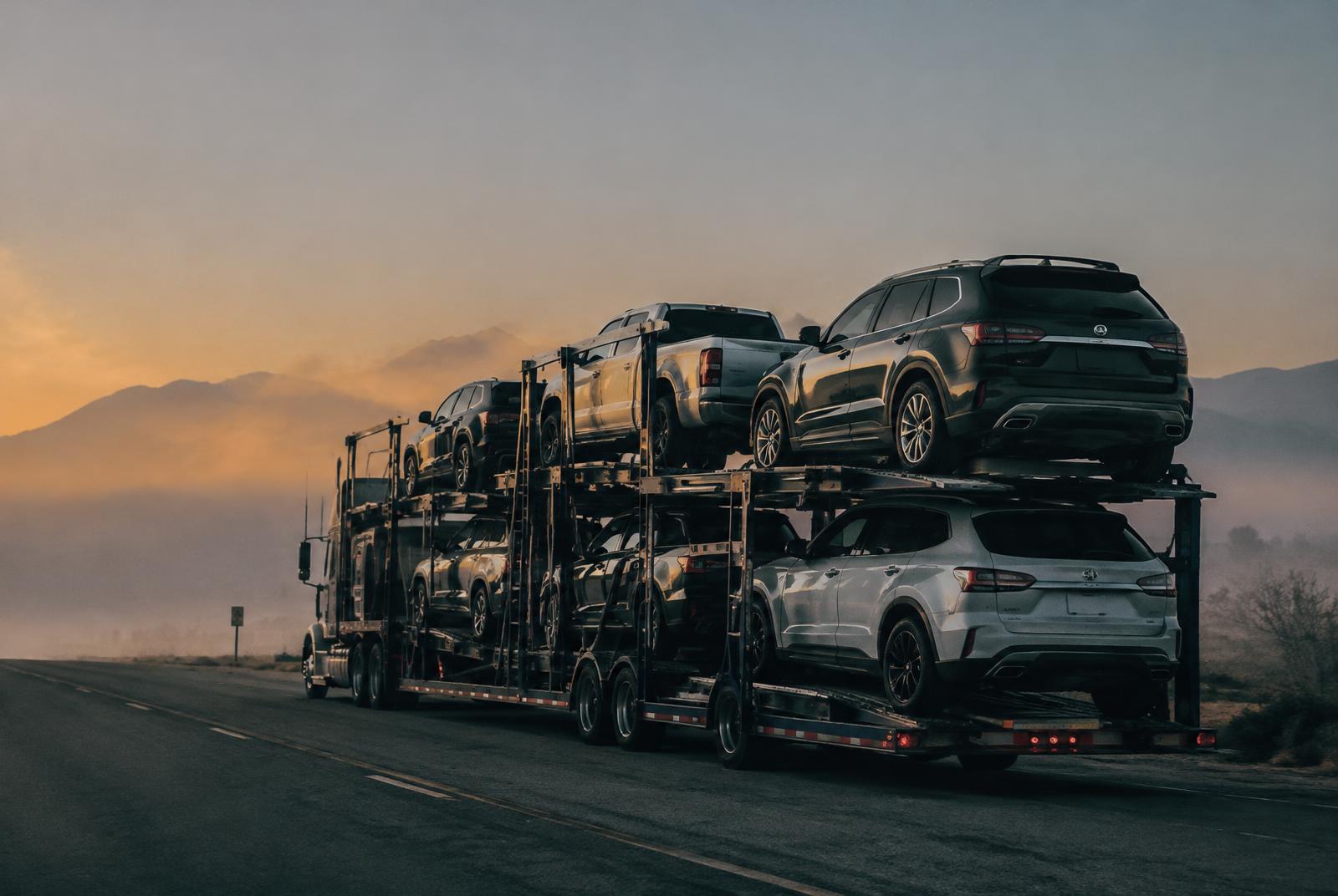
Cost guide
What does it cost to ship a car?
There is no single price for vehicle shipping. Here is what shapes your estimate — and how to get an accurate one.
Pricing factors
Eight factors that shape your estimate.
Distance and route
Longer distances generally cost more overall, but busy interstate corridors between major metros are often more efficient per mile than remote or rural routes.
Pickup and delivery locations
Locations near major highways are typically easier for carriers to reach. Remote, rural or hard-to-access addresses may require extra coordination.
Vehicle type and size
Larger and heavier vehicles — full-size trucks, SUVs and vans — take more space and weight capacity on a carrier than compact cars.
Open vs. enclosed transport
Open transport is the most widely available option. Enclosed transport uses specialized trailers that carry fewer vehicles, so it is usually priced higher.
Running condition
Non-running vehicles need a carrier with a winch or lift equipment, which can narrow carrier options and affect pricing.
Season and demand
Seasonal travel patterns — such as snowbird moves between the Northeast and Florida — and holidays can shift carrier demand on certain lanes.
Timing and flexibility
A flexible pickup window gives more scheduling options. Tight or expedited timelines may affect pricing.
Brokerage and operations
Estimates include the coordination provided by the broker, Redline Motor Group LLC, in addition to the carrier's transportation rate.
Getting an accurate estimate
The more accurate your details, the more useful your estimate. Share exact ZIP codes, the correct year, make and model, whether the vehicle runs, and your preferred timing.
Compare open and enclosed transport to choose the right protection level, and browse popular routes for corridor-specific guidance.
Estimates are non-binding and are not guaranteed carrier quotes. Final pricing depends on route availability, carrier capacity, and shipment details. Voyager does not publish fixed prices because rates change with carrier capacity and demand.
Cost questions
Why don't you list prices online?+
Carrier rates change with demand, season and route conditions, so a published price would quickly become inaccurate. A personalized estimate reflects your specific shipment.
Is the cheapest estimate always the best choice?+
Not necessarily. An estimate that is far below current market conditions may be difficult to match with a carrier, which can delay pickup.
Does a flexible pickup date help?+
Often, yes. Flexibility gives your coordinator more carrier options on your route.
Your next destination
Request a personalized shipping estimate.
Seven simple steps. A non-binding estimate prepared around your route, vehicle and timing.